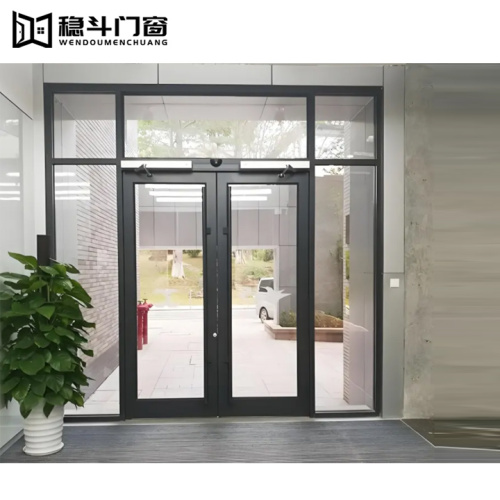
Products> Aluminum Doors> Aluminum Commercial Doors> Commercial Aluminum Storefront Doors
Commercial Aluminum Storefront Doors

Commercial Aluminum Storefront Doors

  • $75-150 /Square Meter

Share:
  • Payment Type: L/C,T/T,Paypal
  • Incoterm: FOB,CFR,EXW,CIF
  • Min. Order: 1 Square Meter
  • Transportation: Ocean
  • Port: Shenzhen,Guangdong
Description
Product Attributes

Model No.WD-CD020

BrandWendou

Packaging & Delivery
Selling Units: Square Meter
Package Type: Adhesive protective film+Bubber film+Hardboard+Strechable plastic wrap+Non-fumigation plywood-crate
Picture Example:
Supply Ability & Additional Information

PackagingAdhesive protective film+Bubber film+Hardboard+Strechable plastic wrap+Non-fumigation plywood-crate

Productivity150000㎡/year

TransportationOcean

Place of OriginMade in China

Supply Ability10000㎡/month

CertificateNFRC/AS2047

HS Code7610100000

PortShenzhen,Guangdong

Payment TypeL/C,T/T,Paypal

IncotermFOB,CFR,EXW,CIF

Product Description
Commercial Aluminum Storefront Doors
1. Structural Features: Modular Design, Balancing Function and Aesthetics
Commercial aluminum storefront doors utilize a modular frame structure, typically consisting of a top rail, bottom rail, hinge stile, and lock stile, with a large area of ​​tempered glass (single or double-layered) embedded in the center.
 
The core design logic is:
Minimalist Frame: Aluminum profiles are typically available in narrow (2-3 inches), medium (4-5 inches), and wide (6 inches and above) widths, connected by concealed hinges or eccentric pivots to minimize visual distractions and emphasize glass transparency.
 
Standardization and Flexibility: The frames of Aluminum Commercial Doors support single-leaf, double-leaf, sliding, or folding door configurations. The bottom rail height is adjustable (e.g., a 10-inch bottom rail meets ADA accessibility standards), adapting to different scenario requirements.
 
Glass Integrated System
Glass and aluminum frame are fixed together using structural adhesive or pressure strips, supporting tempered glass, laminated glass, or low-emissivity (Low-E) glass with thicknesses from 1/4 inch to 1 inch, balancing safety and energy efficiency.
Aluminum commercial doors
 
2. Material Advantages: Durability, Lightweight, and Environmental Friendliness
The core material of aluminum shop doors is 6063-T5 or 6061-T6 aluminum alloy, whose advantages are:
 
Corrosion Resistance: The aluminum surface of Aluminum Doors naturally forms an oxide film. Combined with anodizing or powder coating processes, it can withstand harsh environments such as salt spray and acid rain, with a lifespan exceeding 20 years.
 
High Strength and Lightweight: Aluminum alloy has a density only 1/3 that of steel, but a tensile strength of 200-300 MPa. Combined with a glass-reinforced structure, it can withstand thousands of opening and closing impacts daily without deformation.
 
Optimized Thermal Performance: Utilizing Thermal Break technology, polyamide thermal insulation strips are embedded within the aluminum profiles to block heat conduction, reducing air conditioning energy consumption by 15%-30%.
 
Environmentally Friendly and Recyclable: Aluminum materials have a recycling rate exceeding 95%, and production energy consumption is only 1/5 that of steel, meeting LEED green building certification requirements.
 
3. Applicable Buildings: Covering All Scenarios from Retail to Industry
Aluminum shop doors, due to their versatility, are widely used in the following scenarios:
 
Retail and Commercial: Entrances to shopping malls, specialty stores, and restaurants, using large glass areas to display merchandise and attract customers. For example, the Teza 55 series doors, with their standard 36x84 inch size, fit most retail spaces.
 
Office and Public Buildings: Main entrances to office buildings, hospitals, and schools, requiring high traffic flow and security, can be equipped with bulletproof glass or automatic sensor door systems.
 
Industrial and Warehousing: Factories and logistics centers use heavy-duty aluminum doors (such as the Boyd series), equipped with anti-collision strips and industrial-grade locks, suitable for the entry and exit of heavy equipment.
 
Mixed-use buildings: Apartment retail spaces and shared office spaces can be matched to architectural styles with custom colors (such as black and bronze) and glass textures (frosted and coated).
Aluminum commercial doors
4. Customization Options: The Limitless Possibilities from Size to Smart Features
Aluminum shop doors offer a high degree of customization, with key options including:
Size and Shape: Custom Aluminium Doors support non-standard sizes (e.g., width up to 8 feet, height up to 10 feet), curved, right-angled, or irregular designs to adapt to special building structures.
 
Surface Treatments:
Anodizing: Available in Clear Anodized, Black, Champagne, etc., scratch-resistant and with long-lasting color.
Powder Coating: Over 50 colors available (such as wood grain and metallic paint), with RAL color chart customization supported.
 
Glass Configurations:
Functional Glass: Low-emissivity glass reduces UV radiation, laminated glass is explosion-proof, and electrochromic glass adjusts light transmittance.
Decorative Glass: Frosted, enamel, or art glass enhances privacy and design.
 
Hardware System:
Locks: Multi-point locks, electronic locks, or biometric locks enhance security.
Opening Methods: Manual, automatic sensor, floor spring, or electric sliding rails adapt to different traffic flow needs.
Auxiliary Devices: Windproof strips, door closers, escape push rods meet fire safety regulations.
Intelligent Integration: Can be embedded with facial recognition, temperature monitoring, or air quality sensors, linking with building management systems (BMS) to achieve smart access control.
 
5. Industry Trends
With the increasing demand for green buildings, aluminum shop doors are developing towards high thermal insulation, low energy consumption, and intelligent features. For example, using vacuum glass can reduce the heat transfer coefficient (U-value) to below 0.5 W/(m²·K), approaching passive house standards. Simultaneously, 3D printing technology is beginning to be applied to aluminum profile production, further shortening customization cycles and reducing costs.
 
Commercial aluminum shop doors, with their flexible structure, durable materials, and strong customization capabilities, have become the preferred solution for modern building entrances. In the future, they will continue to integrate new materials and intelligent technologies, driving commercial spaces towards efficiency and sustainability.
 

The file is encrypted. Please fill in the following information to continue accessing it

Contact Us Now
Enter your inquiry details, We will reply you in 24 hours.
* Please fill in the information
* Please fill in your e-mail
* Please fill in the content
Products> Aluminum Doors> Aluminum Commercial Doors> Commercial Aluminum Storefront Doors
Send Inquiry
*
*
*

We will contact you immediately

Fill in more information so that we can get in touch with you faster

Privacy statement: Your privacy is very important to Us. Our company promises not to disclose your personal information to any external company with out your explicit permission.

Send